

SAFEGUARD OF EMILIA APPLE GERMPLASM ( malus communis l. Subsp. YELLOW PIPPIN OF BLENHEIM) BY IN VITRO TISSUE grolwing
Article Sidebar
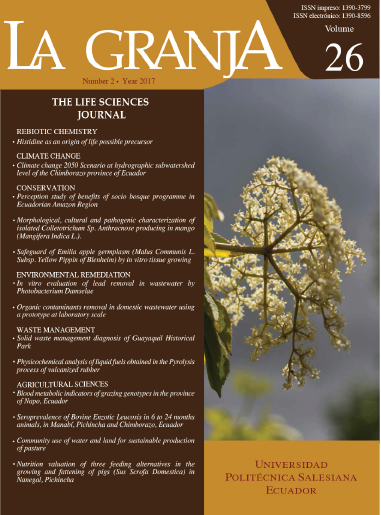
Published:
2017-09-01
Keywords:
Culture media, plant hormones, botanical conservation, micropropagation.
Main Article Content
Abstract
It is of great importance to maintain the genetic diversity of traditional materials and wild plants. The Emilia apple
germplasm was safeguarded, using in vitro tissue culture techniques. Two culture media and six concentrations
were evaluated for disinfection; in addition, eight treatments for budding, using different concentrations of
6-benzylaminopurine (BAP) and for rooting four treatments with indole butyric acid (IBA). We used a DCA with a 2
x 4 factorial arrangement with six observations. The percentages of contamination, oxidation, viability, days at sprouting,
number of shoots and length of shoots were evaluated. Treatments equal to and greater than 10% NaClO for 10
minutes had adequate values of non-contamination of explants. The lower number of oxidized explants had a direct
proportional correlation in the responses to less concentration and time of exposure. The highest percentage of viable
explants (77%) was expressed in 10% NaClO treatment for 15 minutes. The best responses regarding the variable
days to budding were presented in the treatments without BAP intervention. The best response in the number of outbreaks
was manifested for the 1 ppm BAP treatment in the culture media (Murashige and Skoog modified - MSM and
Modified CHU 10 by Gerloff). The best response in the size of the outbreak was expressed in the treatment CHU + 1
ppm BAP. The cellular tissues the Emilia apple show high susceptibility to microbial contaminants and the oxidation
of tissues, which makes it difficult to multiply by in vitro culture. High concentrations of BAP inhibit spontaneous
physiological responses in explants of the Emilia apple, especially in the early stages where there is greater production
of intrinsic hormonal effects.
germplasm was safeguarded, using in vitro tissue culture techniques. Two culture media and six concentrations
were evaluated for disinfection; in addition, eight treatments for budding, using different concentrations of
6-benzylaminopurine (BAP) and for rooting four treatments with indole butyric acid (IBA). We used a DCA with a 2
x 4 factorial arrangement with six observations. The percentages of contamination, oxidation, viability, days at sprouting,
number of shoots and length of shoots were evaluated. Treatments equal to and greater than 10% NaClO for 10
minutes had adequate values of non-contamination of explants. The lower number of oxidized explants had a direct
proportional correlation in the responses to less concentration and time of exposure. The highest percentage of viable
explants (77%) was expressed in 10% NaClO treatment for 15 minutes. The best responses regarding the variable
days to budding were presented in the treatments without BAP intervention. The best response in the number of outbreaks
was manifested for the 1 ppm BAP treatment in the culture media (Murashige and Skoog modified - MSM and
Modified CHU 10 by Gerloff). The best response in the size of the outbreak was expressed in the treatment CHU + 1
ppm BAP. The cellular tissues the Emilia apple show high susceptibility to microbial contaminants and the oxidation
of tissues, which makes it difficult to multiply by in vitro culture. High concentrations of BAP inhibit spontaneous
physiological responses in explants of the Emilia apple, especially in the early stages where there is greater production
of intrinsic hormonal effects.
Article Details
Section
Scientific Article
Universidad Politécnica Salesiana of Ecuador preserves the copyrights of the published works and will favor the reuse of the works. The works are published in the electronic edition of the journal under a Creative Commons Attribution/Noncommercial-No Derivative Works 3.0 Ecuador license: works can be copied, used, disseminated, transmitted and publicly displayed.
The undersigned author partially transfers the copyrights of this work to Universidad Politécnica Salesiana of Ecuador for the printed edition.
References
Bajji, M., y Druart, P. 2011. Protocol development for in vitro assessment of cadmium tolerance in black alder and basket willow at the callus and whole plant levels. In: VII International Symposium on In Vitro Culture and Horticultural Breeding 961: 123-131.
Casas, J., Olmos, E., y Piqueras, A. 2010. In vitro propagation of carnation (Dianthus caryophyllus L.). Protocols for in vitro propagation of ornamental plants, 109-116.
Durham, R. y Korban, S. 1994. Evidence of gene introgression in apple using RAPD markers. Euphytica, 79(1-2), 109-114.
Engelmann, F. 2011. Use of biotechnologies for the conservation of plant biodiversity. In Vitro Cellular & Developmental Biology-Plant, 47(1): 5-16.
Fernández, E., Carvajal, I. y Pérez, A. 2009. In vitro bioaccessibility assessment as a prediction tool of nutritional efficiency. Nutrition Research, 29(11): 751-760.
Forsline, P., Aldwinckle, H., Dickson, E., Luby, J., y Hokanson, S. 2003. Collection, maintenance, characterization, and utilization of wild apples of Central Asia. Horticultural reviews westport then New York, 29, 1-62.
Gagliardi, R., Pacheco, G., Carneiro, L., Valls, J., Vieira, M., y Mansur, E. 2003. Cryopreservation of Arachis species by vitrification of in vitro-grown shoot apices and genetic stability of recovered plants. CryoLetters, 24(2): 103-110.
Gao, X., Kuo, J., Jiang, H., Deeb, D., Liu, Y., Divine, G., y Gautam, S. 2004. Immunomodulatory activity of curcumin: suppression of lymphocyte proliferation, development of cell-mediated cytotoxicity, and cytokine production in vitro. Biochemical pharmacology, 68(1): 51-61.
Habiba, U., Reza, S., Saha, M., Khan, M. y Hadiuzzaman, S. 2002. Endogenous bacterial contamination during in vitro culture of table banana: Identification and prevention. Plant Tissue Cult, 12(2): 117-124.
Hawtin, G., Iwanaga, M. y Hodgkin, T. 1996. Genetic resources in breeding for adaption. In: Euphytica, 92: 255-266.
Iglesias, C. 2002. Pomología actual: el futuro de las variedades de manzano. Tendencias de la producción y de los intercambios comerciales de manzana a escala mundial y europea.
Itoiz, R. 2000. Caracterización de la colección de manzanos (Malus x Domestica, Borkh) del Banco de Germoplasma de la U.P.N.A. Evaluacion de su variabilidad. Tesis Doctoral. U.P.N.A. p 391.
Lara, L. 2010. Pillaro de ayer y hoy. Riobamba: Graficas Freire.
Madritch, M., Donaldson, J. y Lindroth, R. 2006. Genetic identity of Populus tremuloides litter influences decomposition and nutrient release in a mixed forest stand. Ecosystems, 9(4): 528-537.
Martin, K. 2003. Rapid in vitro multiplication and ex vitro rooting of Rotula aquatica Lour., a rare rhoeophytic woody medicinal plant. Plant Cell Reports, 21(5): 415-420.
Pooja, B., Vadez, V., Kiran, K. 2008. Transgenic approaches for abiotic stress tolerance in plants: retrospect and prospects. Plant cell reports, 27: 411–24.
Priolli, R., Mendes, C., Sousa, S., Sousa, N. y Contel, E. 2004. Soybean genetic diversity in time and among breeding programs in Brazil. Pesqui Agropecu Bras 39: 967-975.
Qi, Y., Zhang, D., Zhang, H., Wang, M., Sun, J., Wei, X., Qiu, Z., Tang, S., Cao, Y., Wang, X. y Li, Z. 2006. Genetic diversity of rice cultivars (Oryza sativa L.) in China and the temporal trends in recent fifty years. Chin Sci Bull 51:681-688
Roussel, V., Leisova, L., Exbrayat, F., Stehno, Z. y Balfourier, F. 2005. SSR allelic diversity changes in 480 European bread wheat varieties released from 1840 to 2000. Theor Appl Genet 111:162–170.
Sakai, A. 1997. Potentially valuable cryogenic procedures for cryopreservation of cultured plant meristems In: M.K. Razdan, E.C. Cocking (Eds.), Conservation of plant genetic resources in vitro General aspects, vol. 1 (1997), pp. 53–66.
Senula, A. y Keller, E. 2000. Morphological characterization of a garlic core collection and establishment of a virus-free in vitro genebank, Allium Improv News 10 (2000) 3–5.
Swain, S. y Singh, D. 2005. Tall tales from sly dwarves: novel functions of gibberellins in plant development. Trends in plant science, 10(3): 123-129.
Towill, L., Forsline, P., Walters, C., Waddell, J. y Laufmann, J. 2004. Cryopreservation of Malus germplasm using a winter vegetative bud method: results from 1915 accessions. Cryo Lett. 25:323 – 334.
Tyagi, R., Agrawal, A., Mahalakshmi, C., Hussain, Z. y Tyagi, H. 2007. Low-cost media for in vitro conservation of turmeric (Curcuma longa L.) and genetic stability assessment using RAPD markers. In Vitro Cellular & Developmental Biology-Plant, 43(1): 51-58.
Verdeil, J., Alemanno, L., Niemenak, N. y Tranbarger, T. 2007. Pluripotent versus totipotent plant stem cells: dependence versus autonomy?. Trends in plant science, 12(6),245-252.
Xinyu, J., Lin, Z., Guanglin, L., Liang, Z., Xiujie, W., Xiaofeng, C., Xiaohua, F. y Fan, C. 2010. Identification of novel stress-regulated microRNAs from Oryza sativa L. Genomics, 95: 47–55.
Casas, J., Olmos, E., y Piqueras, A. 2010. In vitro propagation of carnation (Dianthus caryophyllus L.). Protocols for in vitro propagation of ornamental plants, 109-116.
Durham, R. y Korban, S. 1994. Evidence of gene introgression in apple using RAPD markers. Euphytica, 79(1-2), 109-114.
Engelmann, F. 2011. Use of biotechnologies for the conservation of plant biodiversity. In Vitro Cellular & Developmental Biology-Plant, 47(1): 5-16.
Fernández, E., Carvajal, I. y Pérez, A. 2009. In vitro bioaccessibility assessment as a prediction tool of nutritional efficiency. Nutrition Research, 29(11): 751-760.
Forsline, P., Aldwinckle, H., Dickson, E., Luby, J., y Hokanson, S. 2003. Collection, maintenance, characterization, and utilization of wild apples of Central Asia. Horticultural reviews westport then New York, 29, 1-62.
Gagliardi, R., Pacheco, G., Carneiro, L., Valls, J., Vieira, M., y Mansur, E. 2003. Cryopreservation of Arachis species by vitrification of in vitro-grown shoot apices and genetic stability of recovered plants. CryoLetters, 24(2): 103-110.
Gao, X., Kuo, J., Jiang, H., Deeb, D., Liu, Y., Divine, G., y Gautam, S. 2004. Immunomodulatory activity of curcumin: suppression of lymphocyte proliferation, development of cell-mediated cytotoxicity, and cytokine production in vitro. Biochemical pharmacology, 68(1): 51-61.
Habiba, U., Reza, S., Saha, M., Khan, M. y Hadiuzzaman, S. 2002. Endogenous bacterial contamination during in vitro culture of table banana: Identification and prevention. Plant Tissue Cult, 12(2): 117-124.
Hawtin, G., Iwanaga, M. y Hodgkin, T. 1996. Genetic resources in breeding for adaption. In: Euphytica, 92: 255-266.
Iglesias, C. 2002. Pomología actual: el futuro de las variedades de manzano. Tendencias de la producción y de los intercambios comerciales de manzana a escala mundial y europea.
Itoiz, R. 2000. Caracterización de la colección de manzanos (Malus x Domestica, Borkh) del Banco de Germoplasma de la U.P.N.A. Evaluacion de su variabilidad. Tesis Doctoral. U.P.N.A. p 391.
Lara, L. 2010. Pillaro de ayer y hoy. Riobamba: Graficas Freire.
Madritch, M., Donaldson, J. y Lindroth, R. 2006. Genetic identity of Populus tremuloides litter influences decomposition and nutrient release in a mixed forest stand. Ecosystems, 9(4): 528-537.
Martin, K. 2003. Rapid in vitro multiplication and ex vitro rooting of Rotula aquatica Lour., a rare rhoeophytic woody medicinal plant. Plant Cell Reports, 21(5): 415-420.
Pooja, B., Vadez, V., Kiran, K. 2008. Transgenic approaches for abiotic stress tolerance in plants: retrospect and prospects. Plant cell reports, 27: 411–24.
Priolli, R., Mendes, C., Sousa, S., Sousa, N. y Contel, E. 2004. Soybean genetic diversity in time and among breeding programs in Brazil. Pesqui Agropecu Bras 39: 967-975.
Qi, Y., Zhang, D., Zhang, H., Wang, M., Sun, J., Wei, X., Qiu, Z., Tang, S., Cao, Y., Wang, X. y Li, Z. 2006. Genetic diversity of rice cultivars (Oryza sativa L.) in China and the temporal trends in recent fifty years. Chin Sci Bull 51:681-688
Roussel, V., Leisova, L., Exbrayat, F., Stehno, Z. y Balfourier, F. 2005. SSR allelic diversity changes in 480 European bread wheat varieties released from 1840 to 2000. Theor Appl Genet 111:162–170.
Sakai, A. 1997. Potentially valuable cryogenic procedures for cryopreservation of cultured plant meristems In: M.K. Razdan, E.C. Cocking (Eds.), Conservation of plant genetic resources in vitro General aspects, vol. 1 (1997), pp. 53–66.
Senula, A. y Keller, E. 2000. Morphological characterization of a garlic core collection and establishment of a virus-free in vitro genebank, Allium Improv News 10 (2000) 3–5.
Swain, S. y Singh, D. 2005. Tall tales from sly dwarves: novel functions of gibberellins in plant development. Trends in plant science, 10(3): 123-129.
Towill, L., Forsline, P., Walters, C., Waddell, J. y Laufmann, J. 2004. Cryopreservation of Malus germplasm using a winter vegetative bud method: results from 1915 accessions. Cryo Lett. 25:323 – 334.
Tyagi, R., Agrawal, A., Mahalakshmi, C., Hussain, Z. y Tyagi, H. 2007. Low-cost media for in vitro conservation of turmeric (Curcuma longa L.) and genetic stability assessment using RAPD markers. In Vitro Cellular & Developmental Biology-Plant, 43(1): 51-58.
Verdeil, J., Alemanno, L., Niemenak, N. y Tranbarger, T. 2007. Pluripotent versus totipotent plant stem cells: dependence versus autonomy?. Trends in plant science, 12(6),245-252.
Xinyu, J., Lin, Z., Guanglin, L., Liang, Z., Xiujie, W., Xiaofeng, C., Xiaohua, F. y Fan, C. 2010. Identification of novel stress-regulated microRNAs from Oryza sativa L. Genomics, 95: 47–55.